
Huangmushan Village Road Pavilion
Type | Architectural Design
Architect | Wang Junlei
Completion Year | 2023
Address | Huangmushan Village
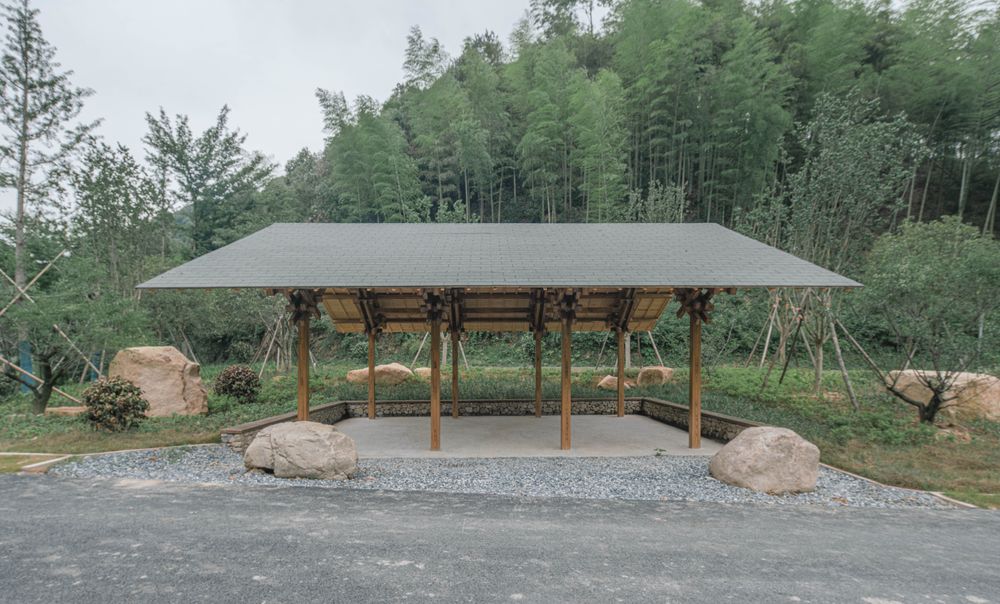
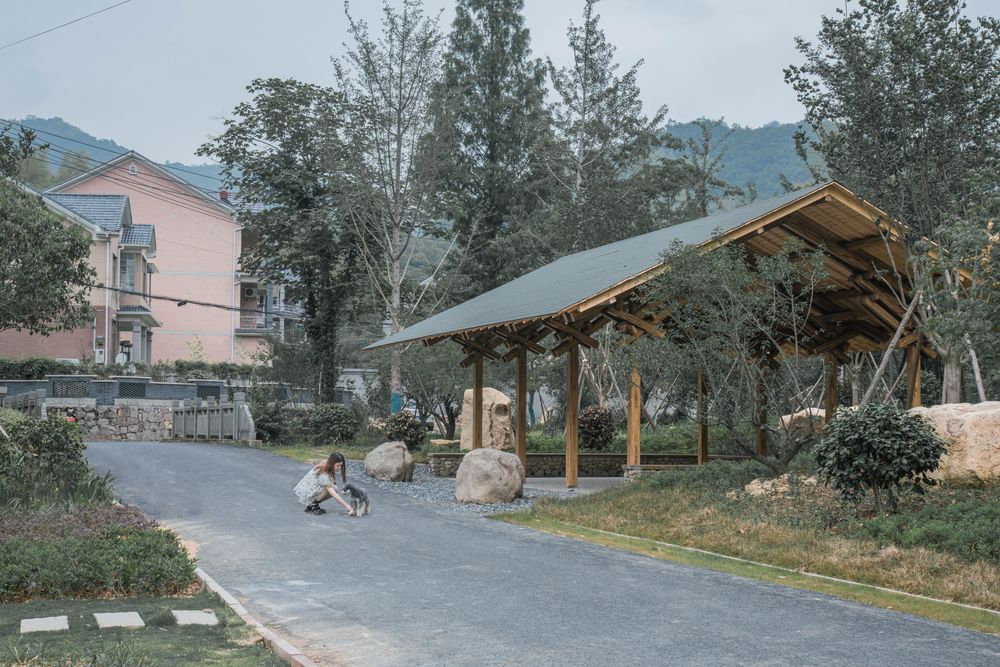
In traditional villages across Zhejiang, it is common practice to build roadside pavilions at village entrances.A common saying goes: one long pavilion every ten li, one short pavilion every five li.Roadside pavilions serve not only as shelters for travelers to rest, but also as markers of distance.They often form the centerpiece of a village entrance and a key node in its spatial structure.The design and construction of the Road Pavilion in Huangmushan Village are rooted in this tradition.
The pavilion has three bays in width and six rafter lengths in depth,with a small stream to its east and a hill to its south.Its eaves, composed of fascia rafters and flying rafters, expand the interior spaceand deepen the overhang for better shelter.
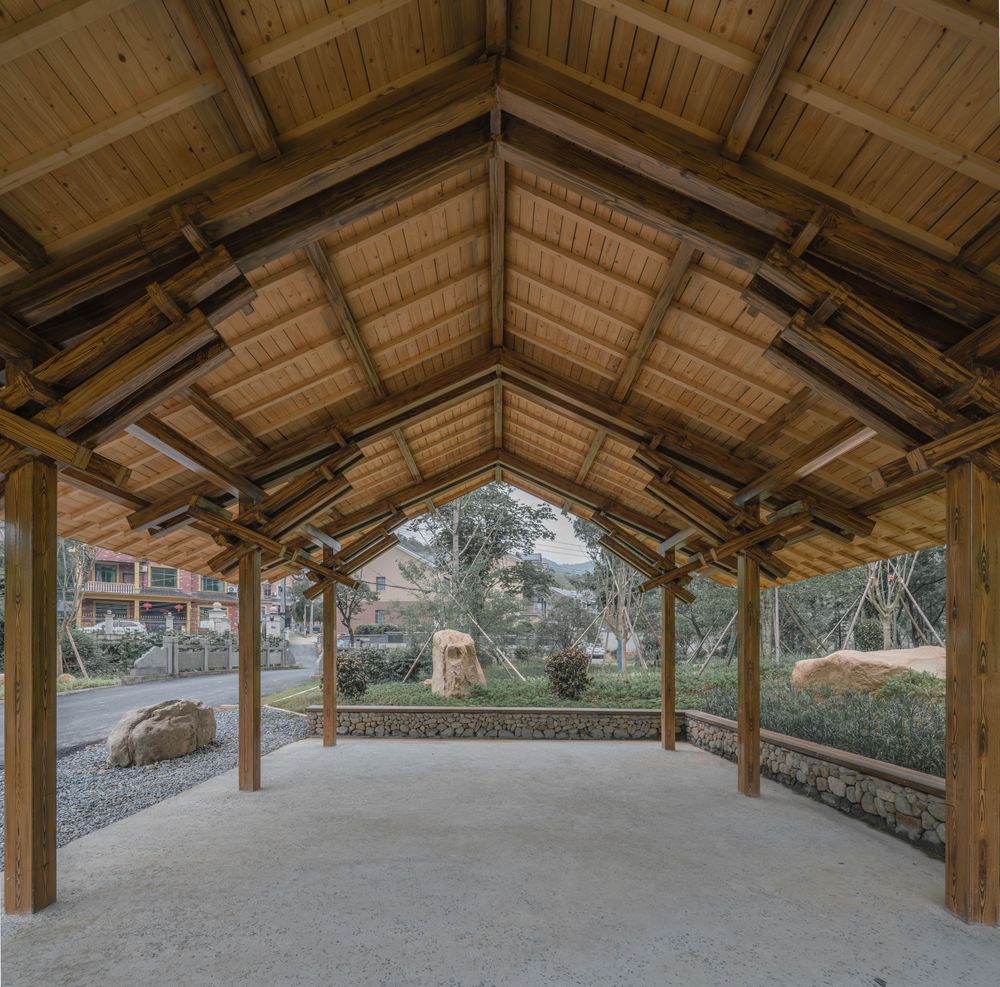
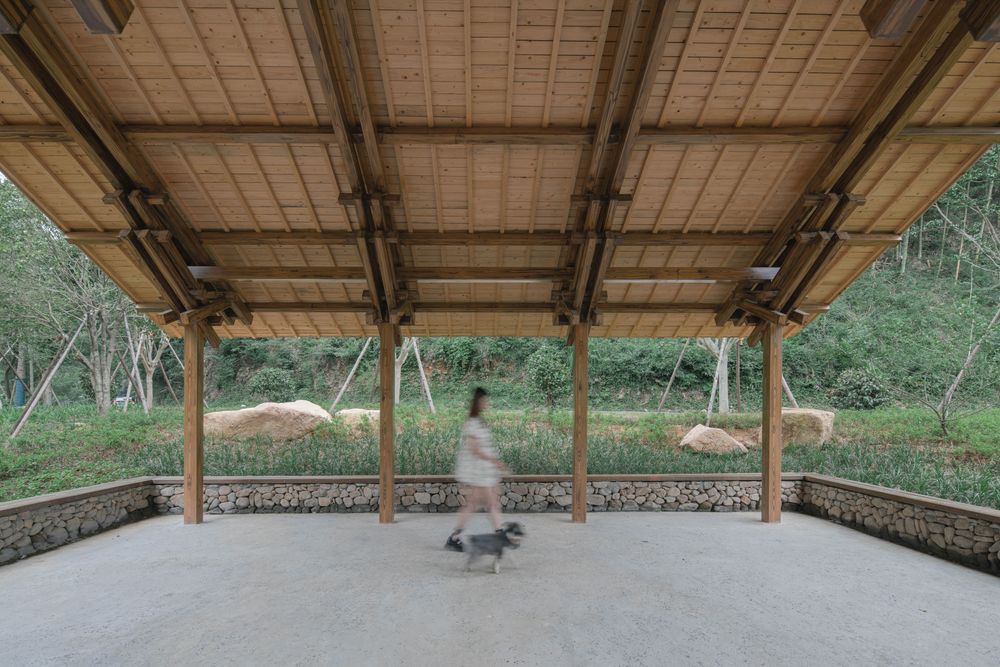
Constrained by the sloped terrain — higher in the south and lower in the north —the lower part of the pavilion is embedded in earth, enhancing the lightness of its overall form.Its internal structural supports are a variation of the chenggong (bracket-arm) system,a classic cantilevered structure found under the eaves of traditional Zhejiang dwellings.
In fact, we have carried out multiple construction experiments with this system,from small-scale joinery to full structural carpentry.In this project, diagonal supports assembled from various small componentsare attached to the structural columns to achieve large spans and deep eaves.
We hope this roadside pavilion will not only provide a new gathering space for villagersbut also reshape the landscape of the stream and mountain at the village entranceand redefine the starting point of the village’s spatial sequence.