
Qingshan Village Cultural Auditorium
Type: Architectural Design
Architect | Huang Mingjian / Co-founder and Principal Architect of MOMENTUM Architects
Completion Year: 2024
Address: Qingshan Village Cultural Auditorium
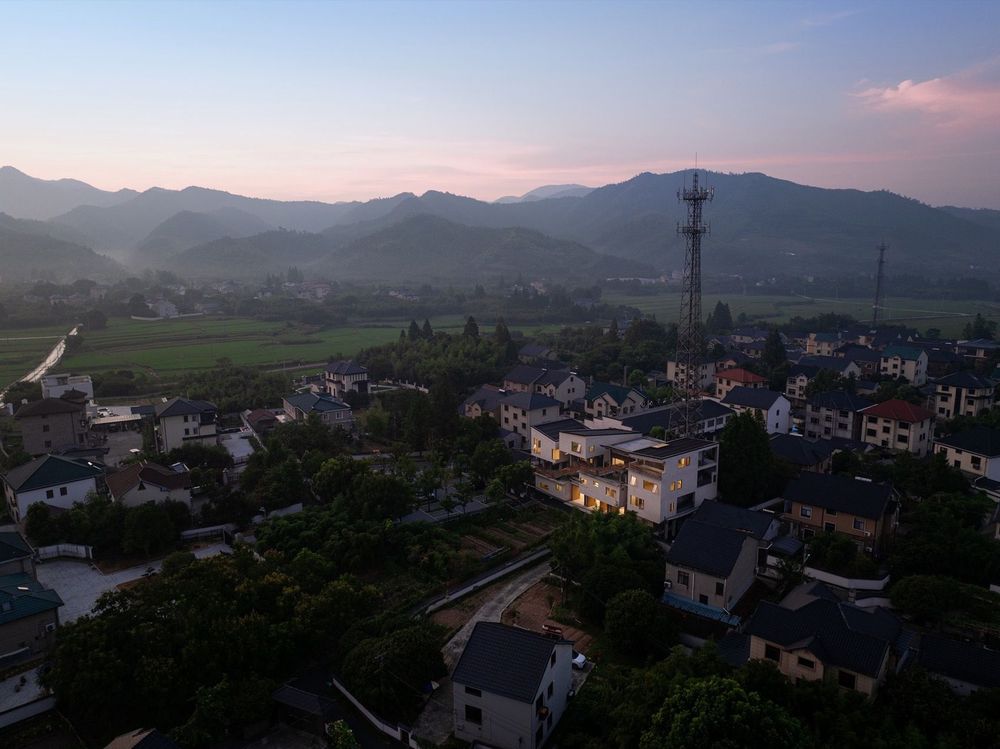
Qingshan Village Cultural Hall is situated on Xiaojiao Line, Qingshan Village, Huanghu Town. Construction commenced in December 2020 and was completed in May 2024, spanning a total of three years and six months.
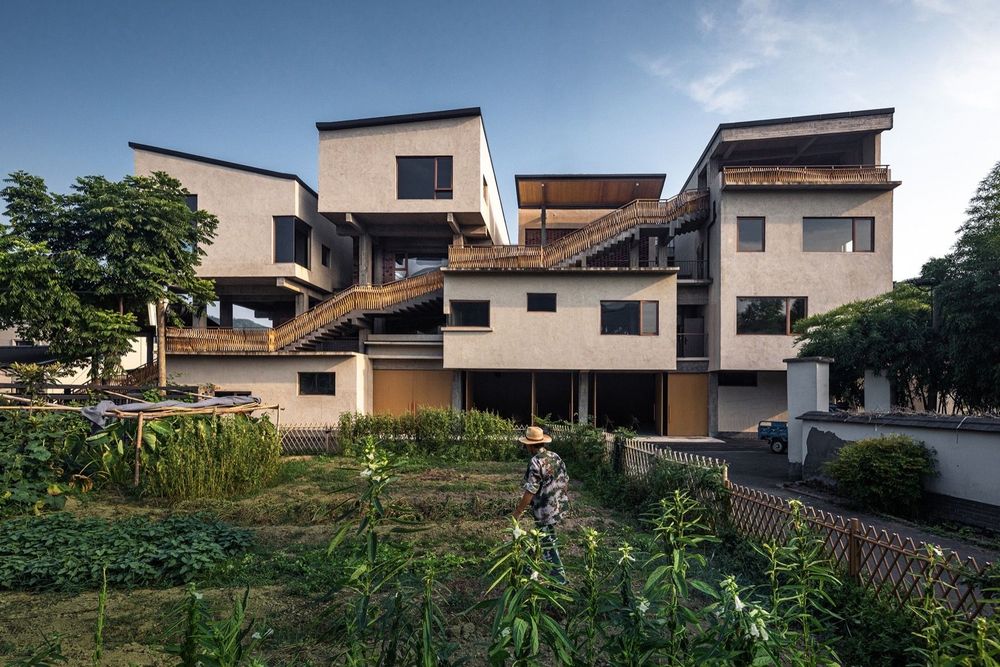
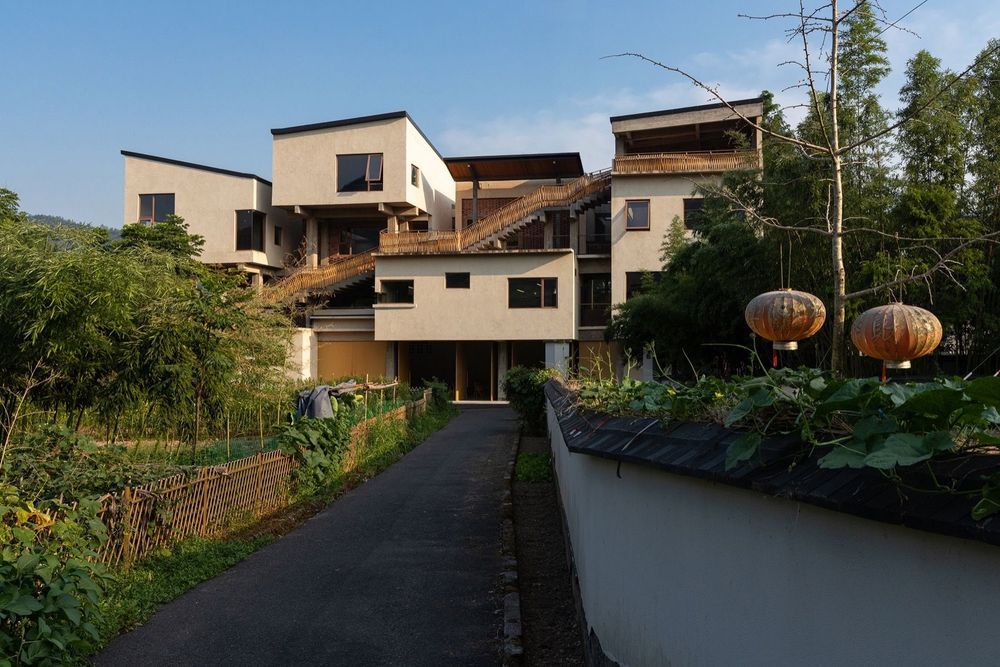
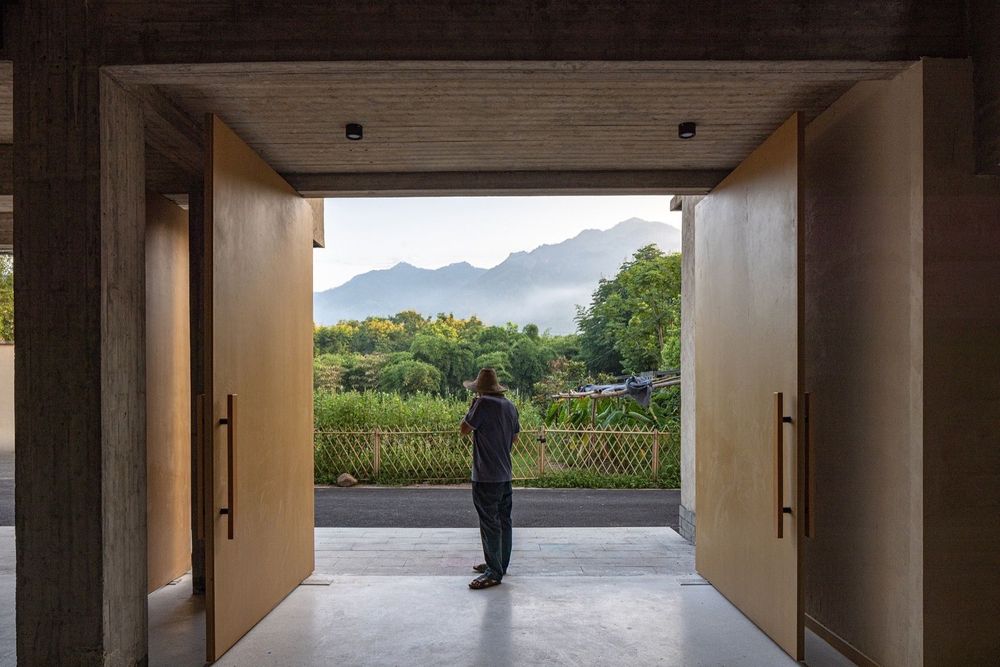
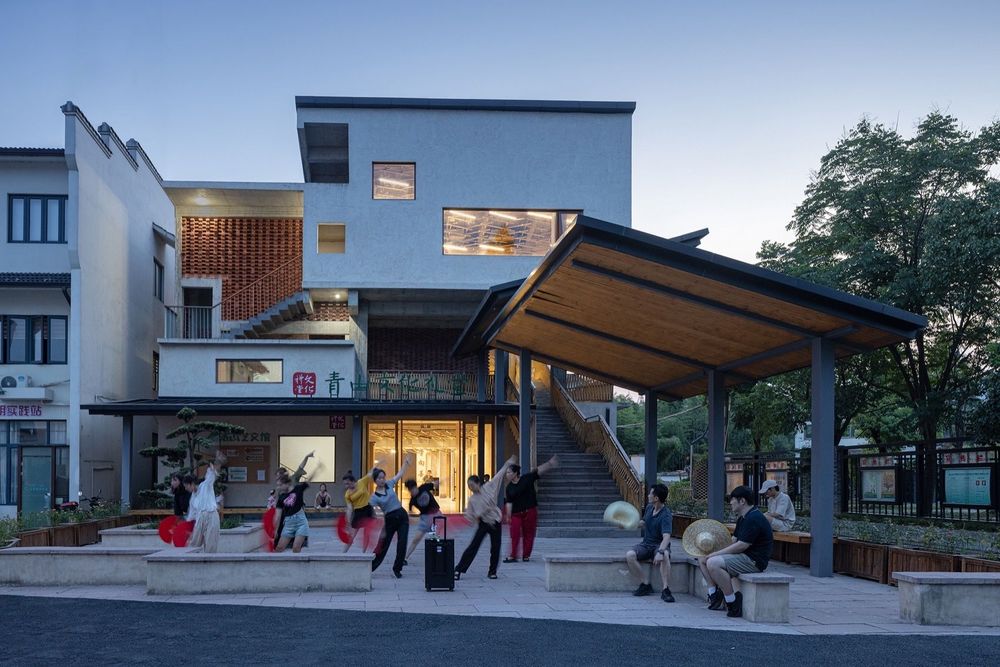
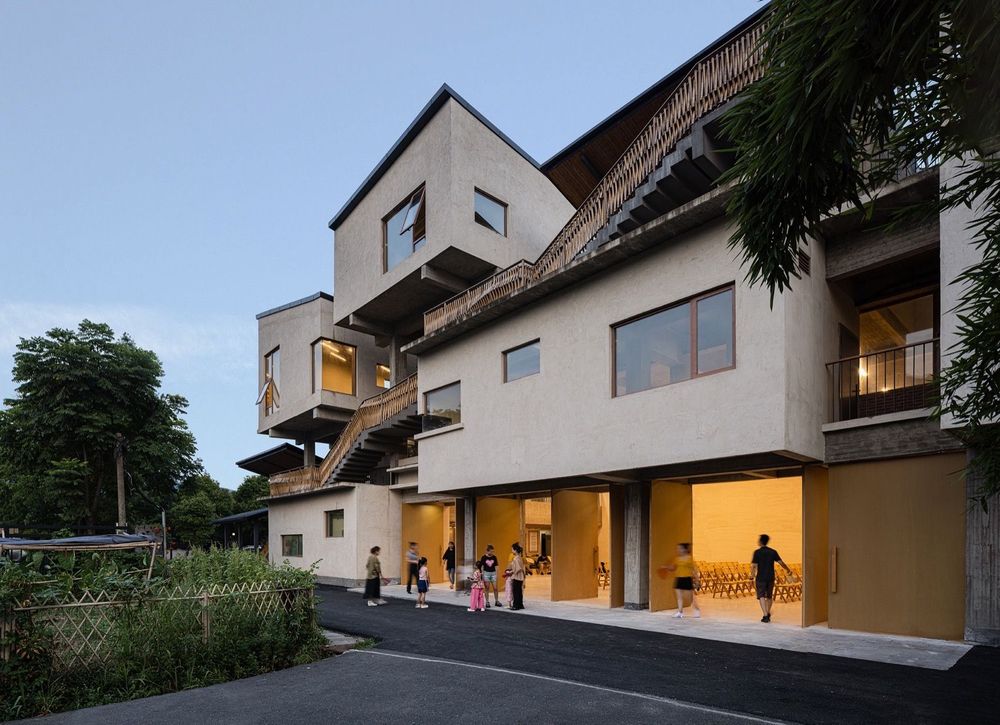
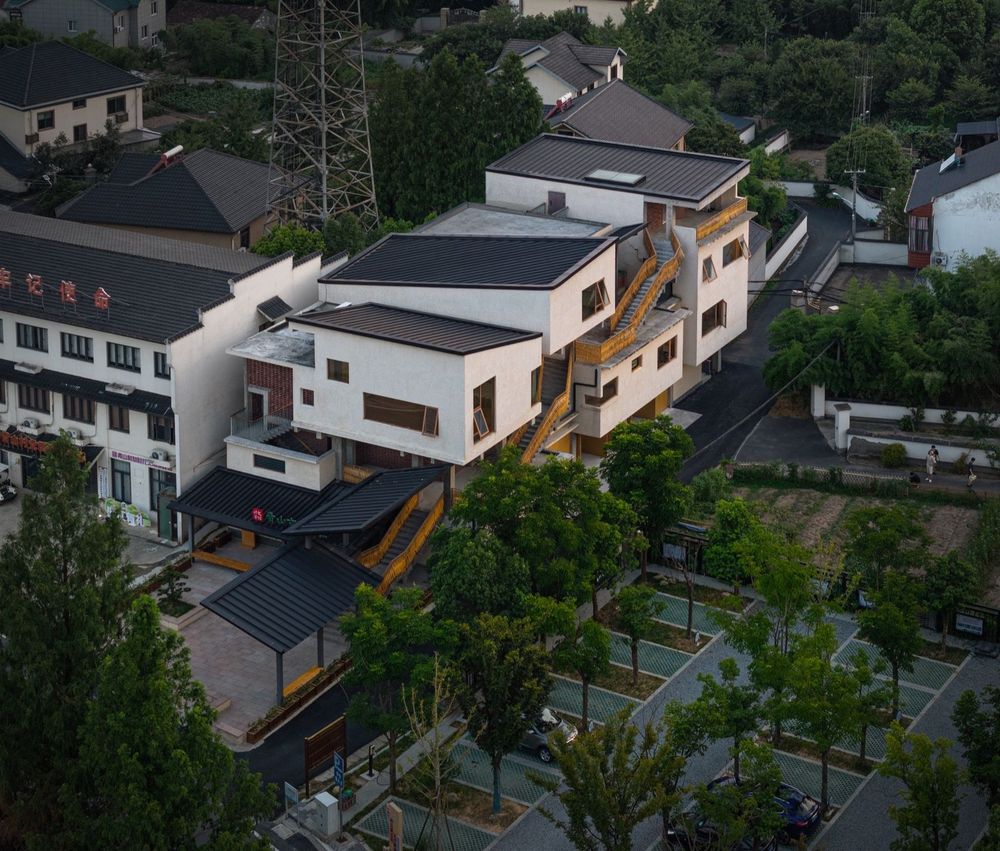
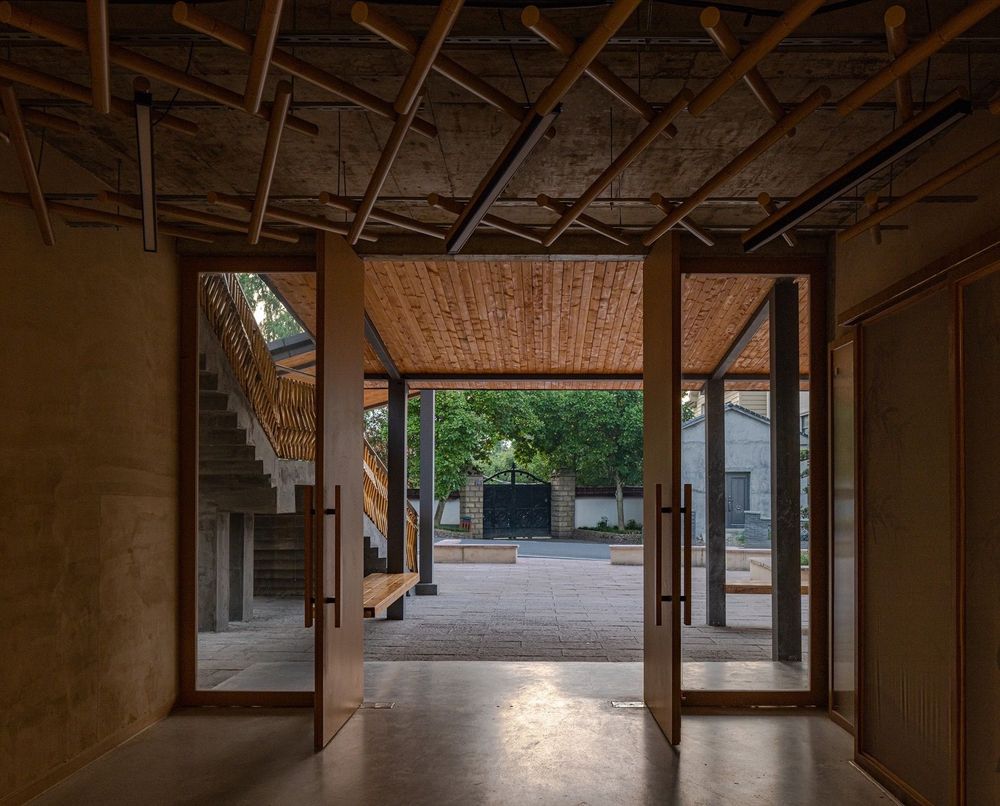
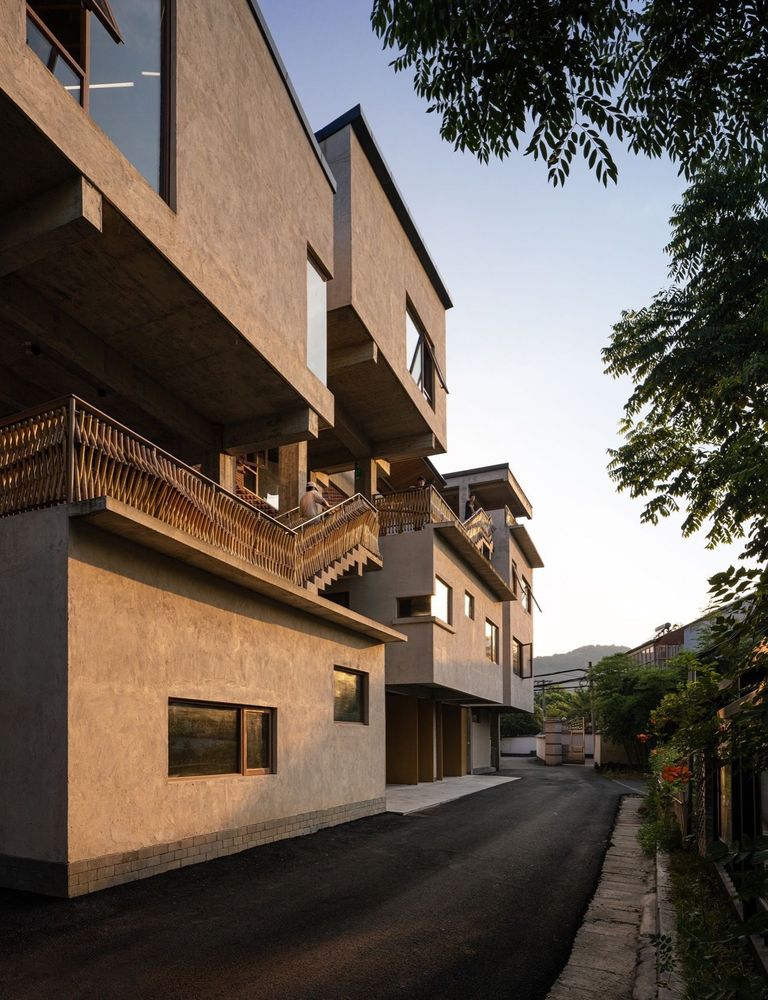
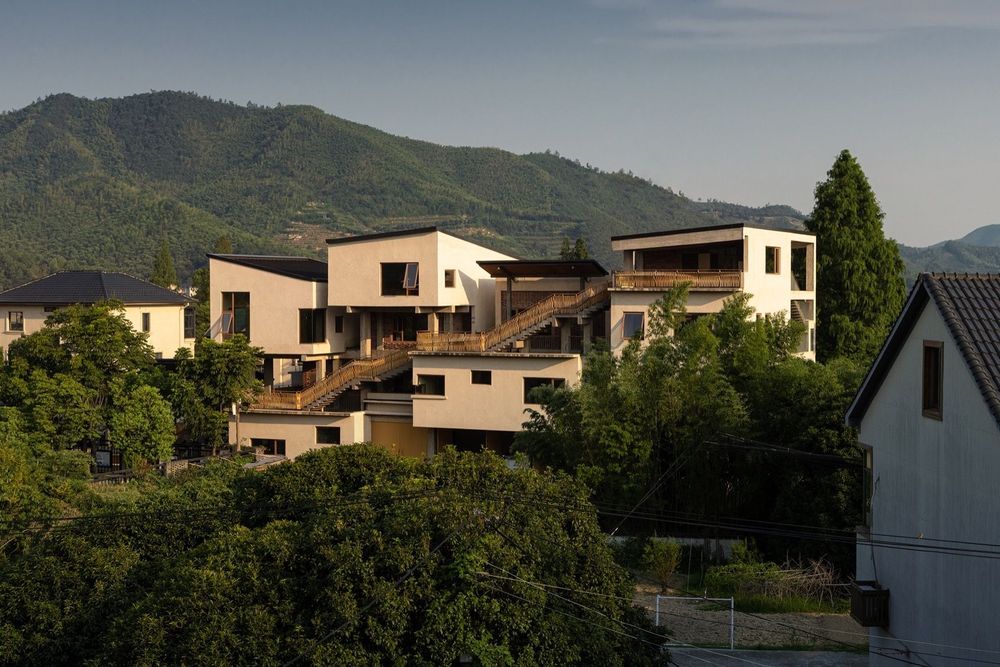
During the site investigation, designer Huang Mingjian observed that the existing cultural hall was adjacent to the Qingshan Village Committee to the south and faced the rolling green hills to the north. The design concept therefore focused on creating a visual and spatial connection between the village committee and the natural landscape. The original cramped building, characterized by insufficient lighting and ventilation, was demolished. The new structure is linked to the village committee via irregular, undulating rooflines, forming a triangular outdoor courtyard that softens the boundary between the public space of the village committee and the surrounding residential areas. This shaded outdoor area provides a comfortable gathering space for the elderly to rest and for children to play.
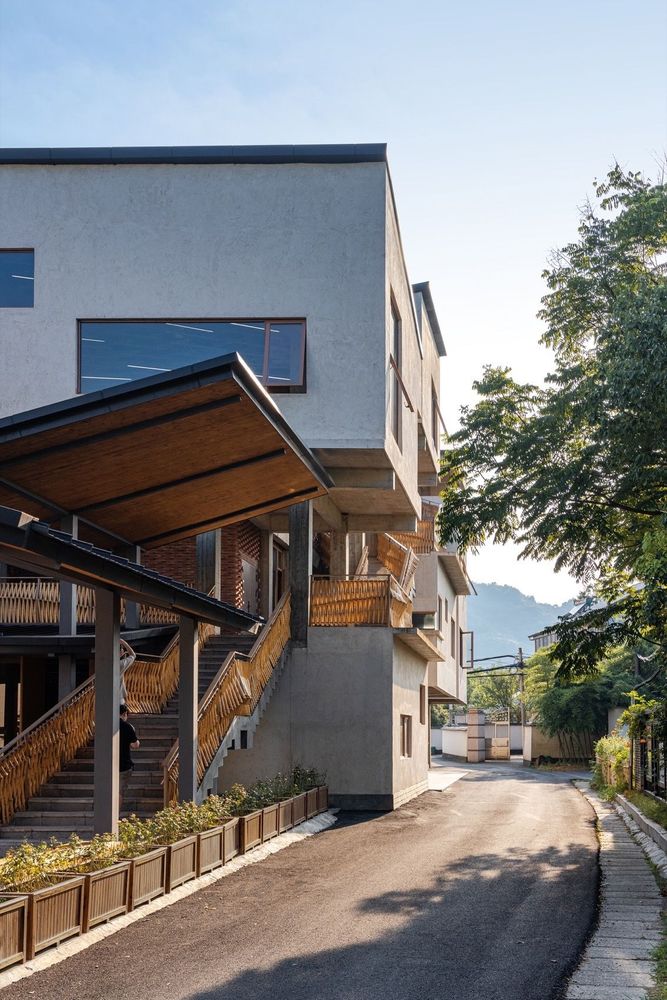
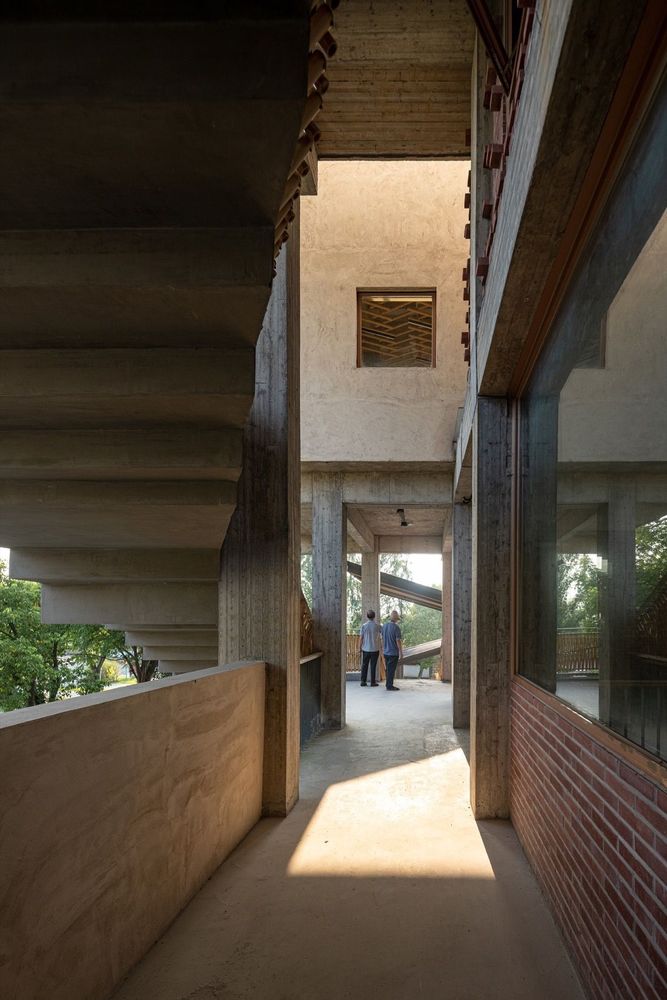
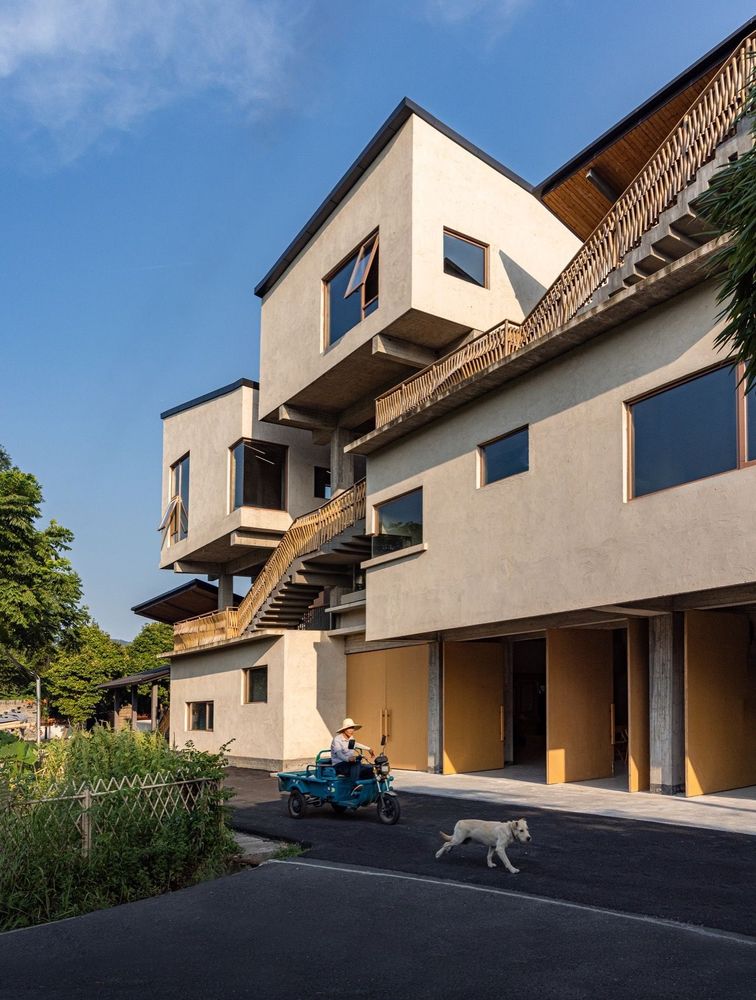
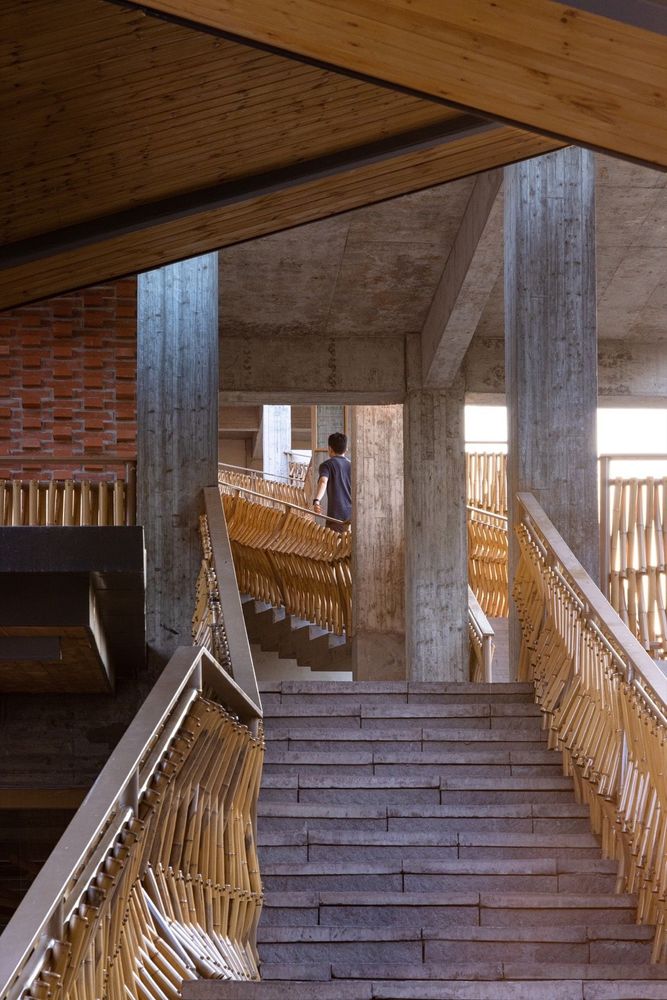
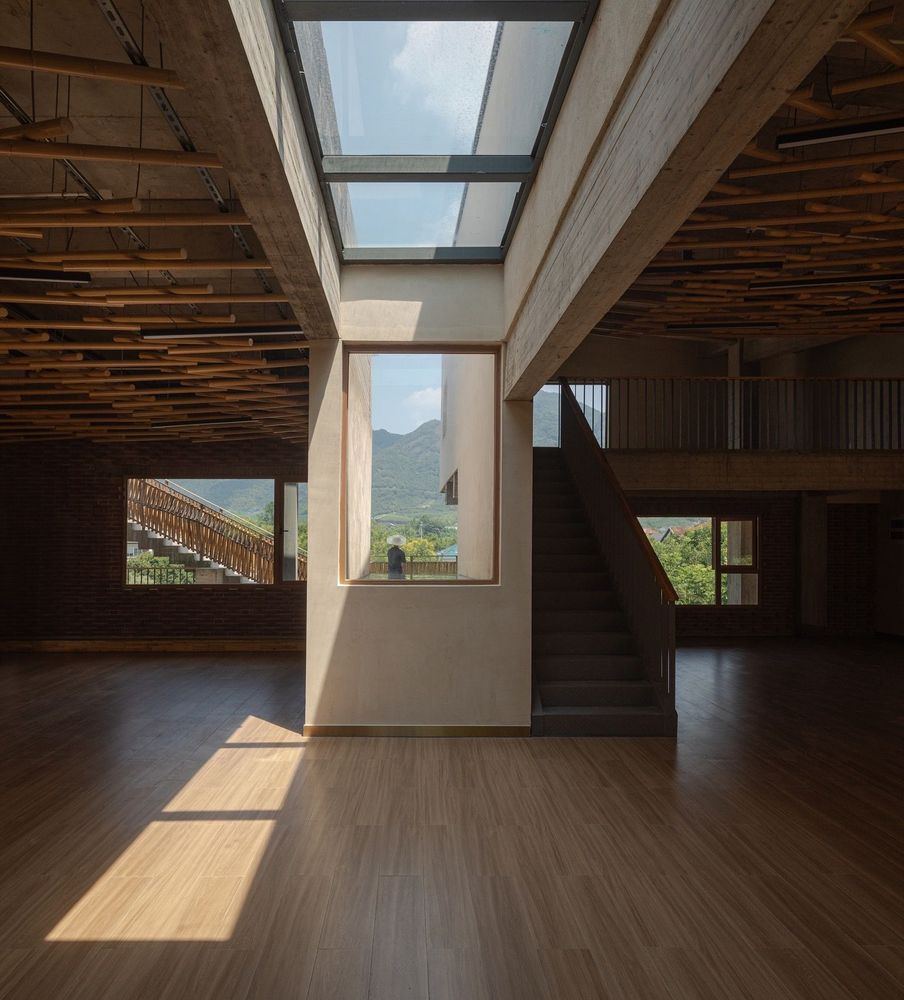
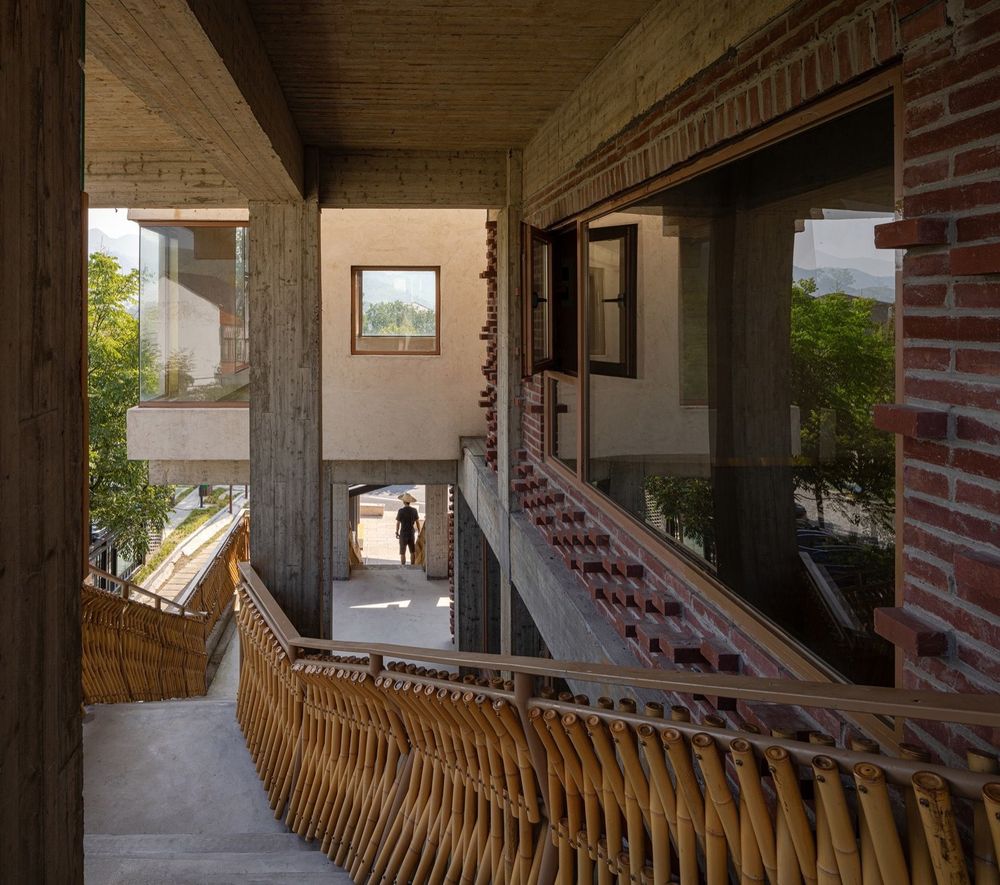
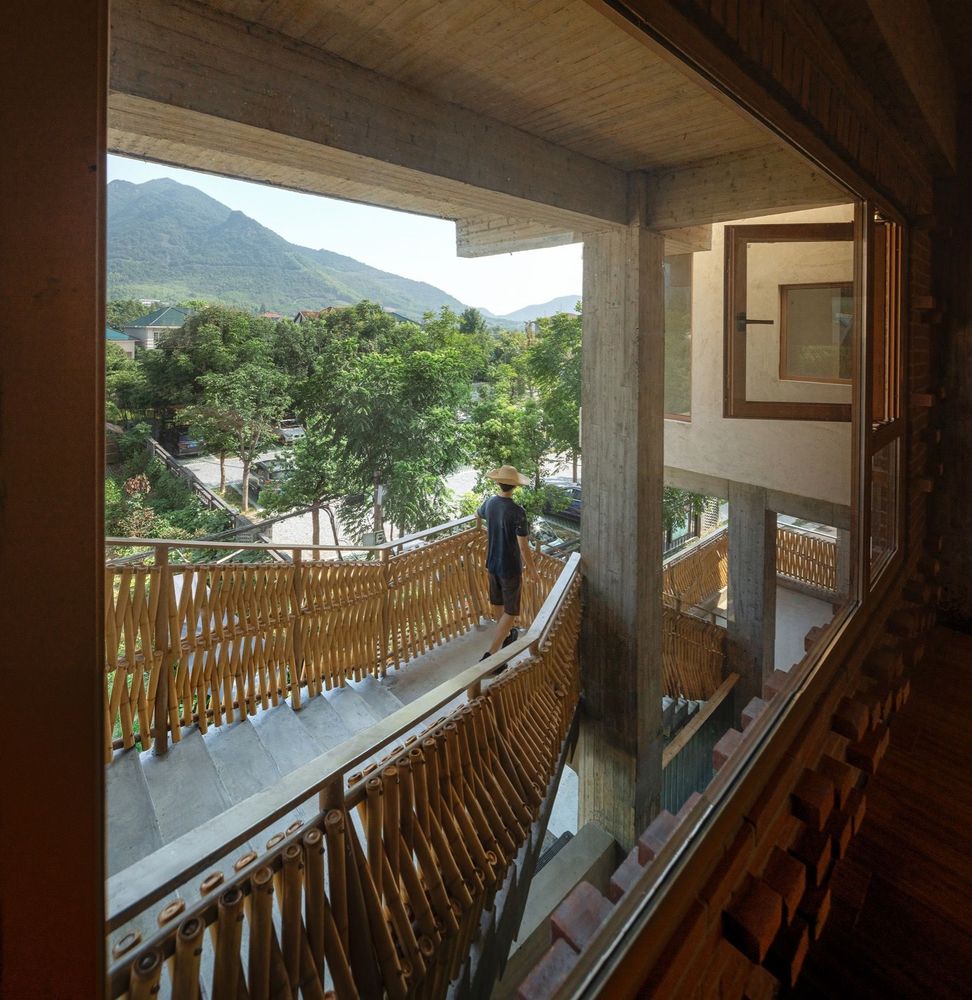
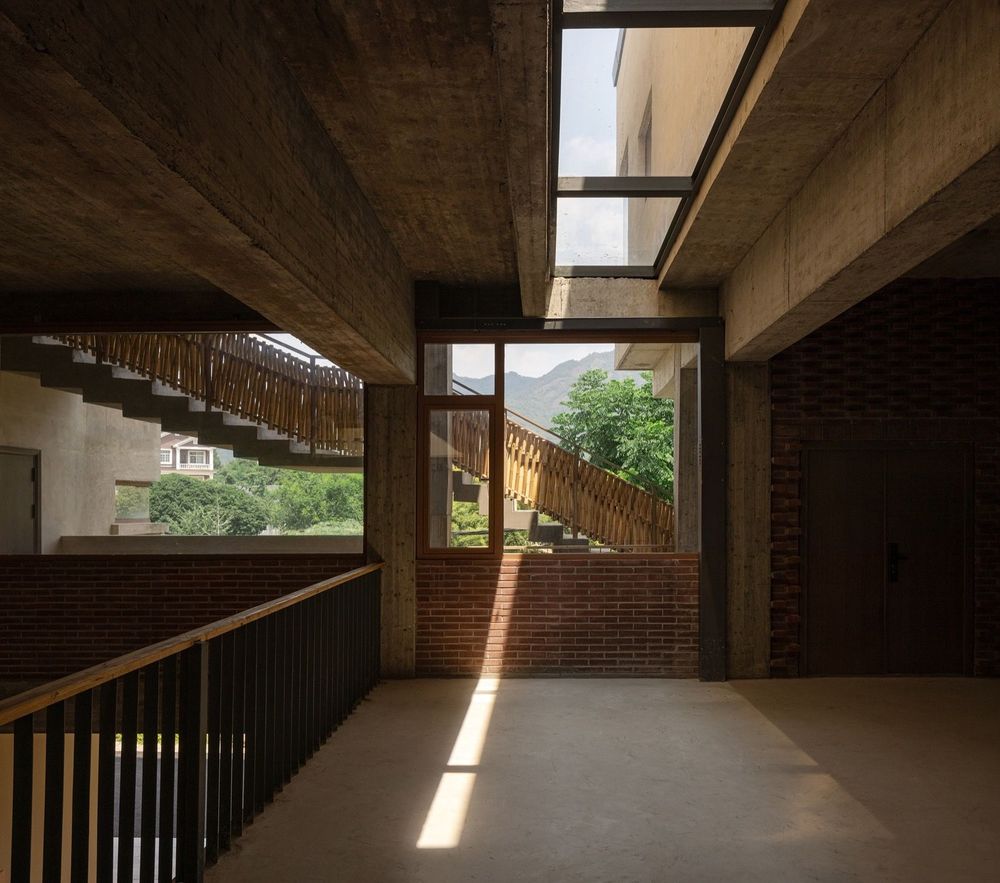
A three-story void with a connecting staircase is integrated into the building, embodying the design concept of “An Endless Walk Through Green Hills”. By emphasizing a sense of movement and circulation, visitors are encouraged to meander through the structure, actively engaging in the transition between interior and exterior spaces, the dialogue between architecture and nature, and social interaction among people.
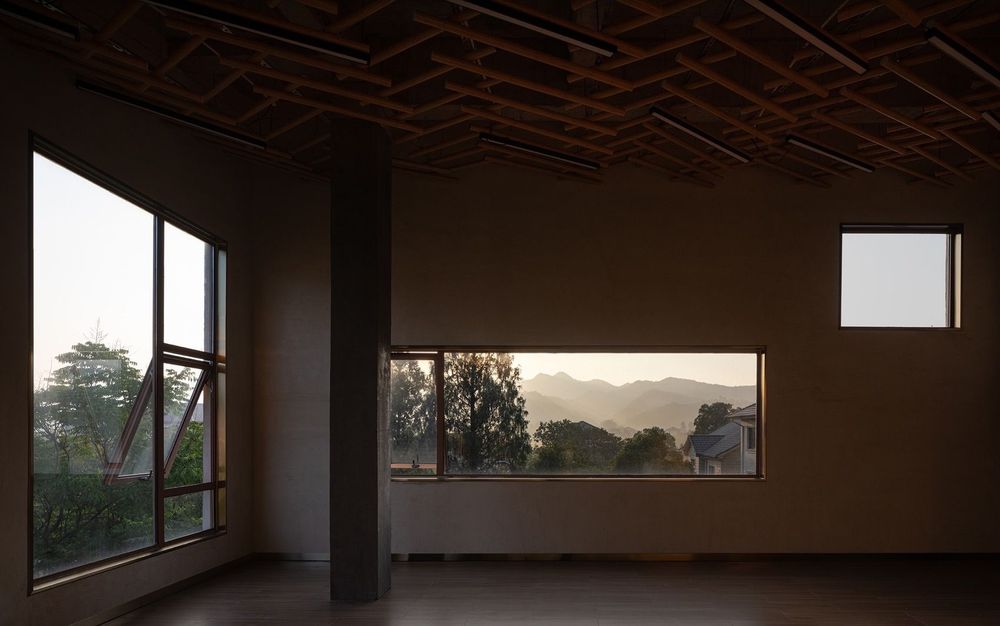
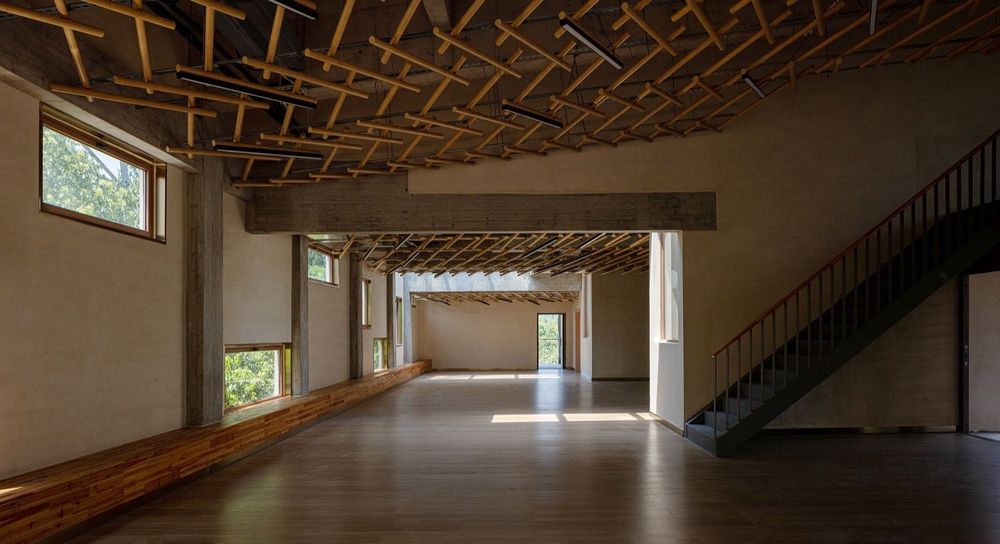
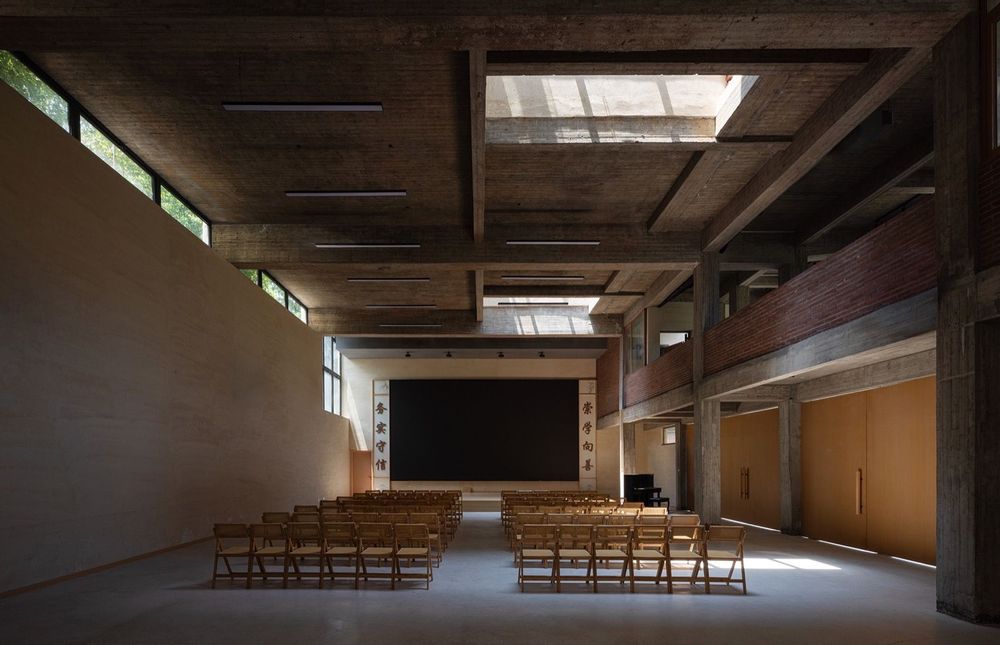
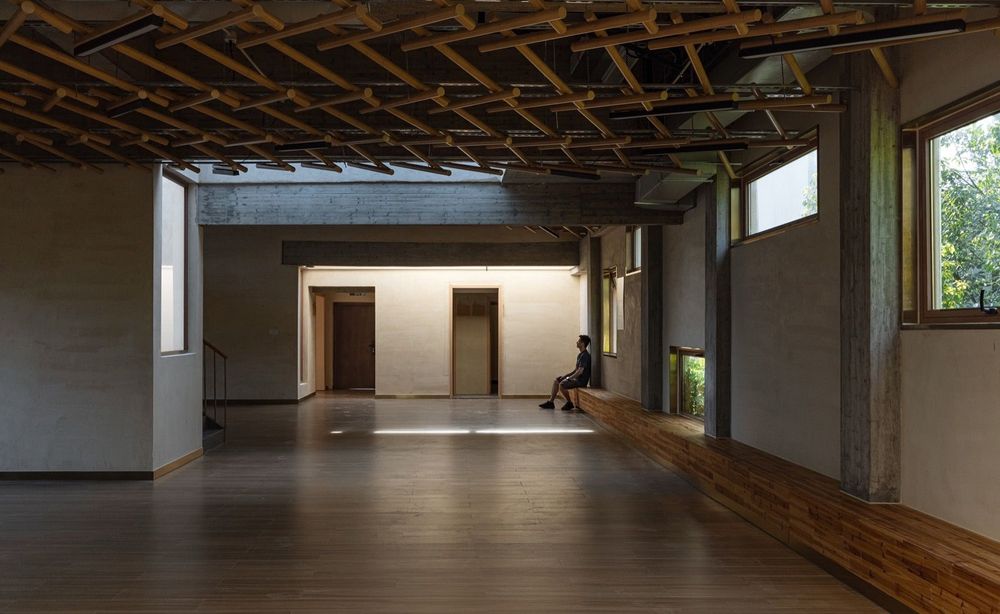
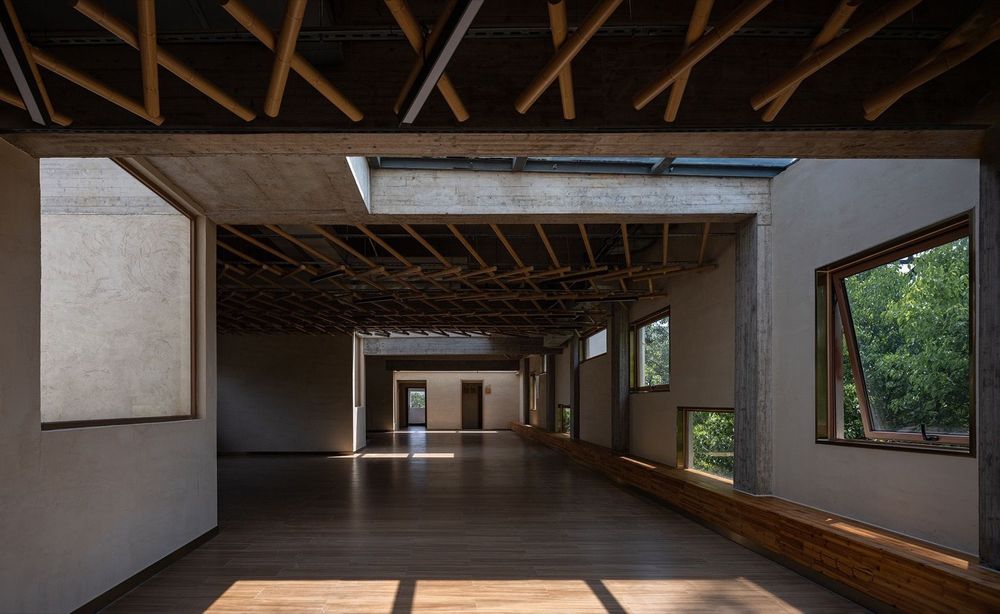
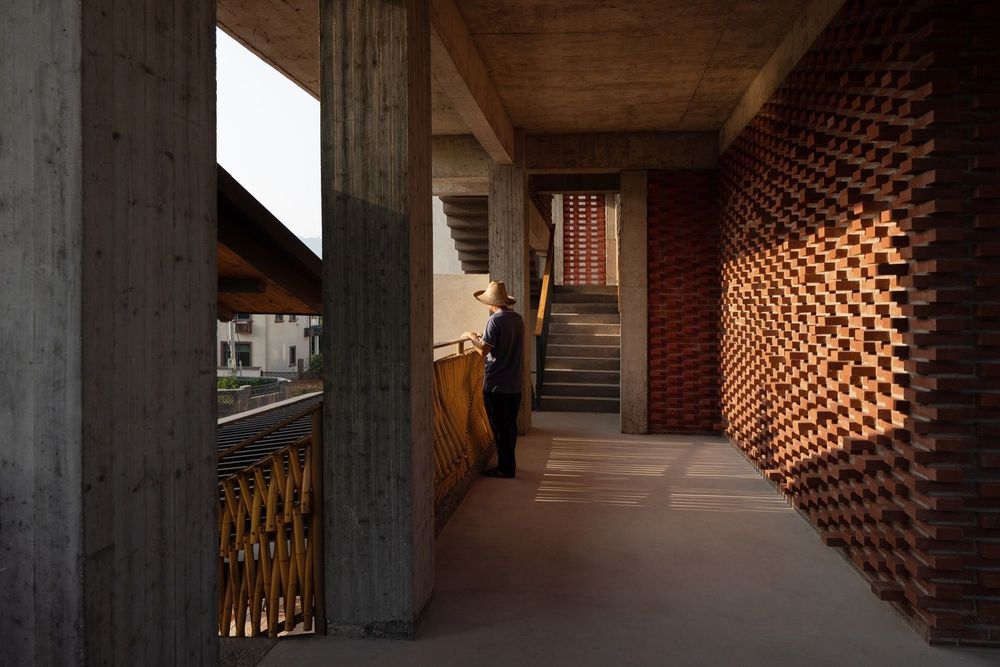
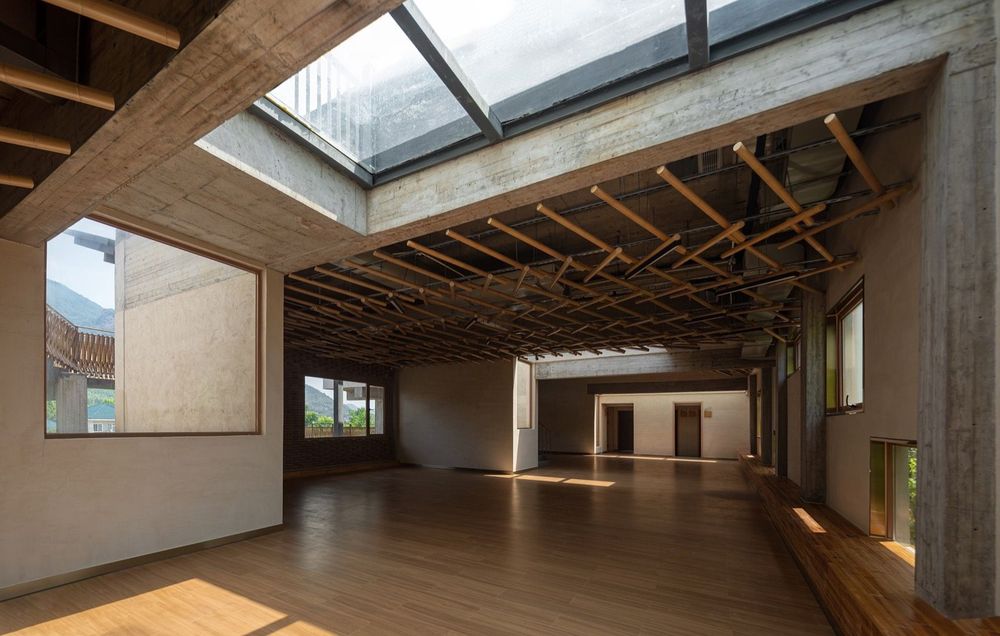
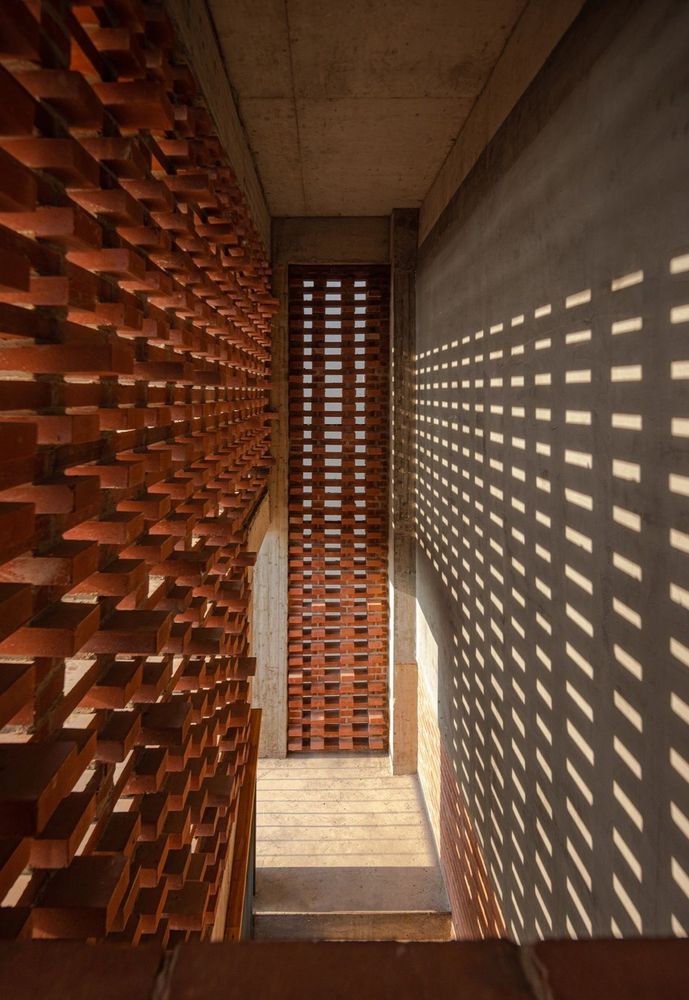
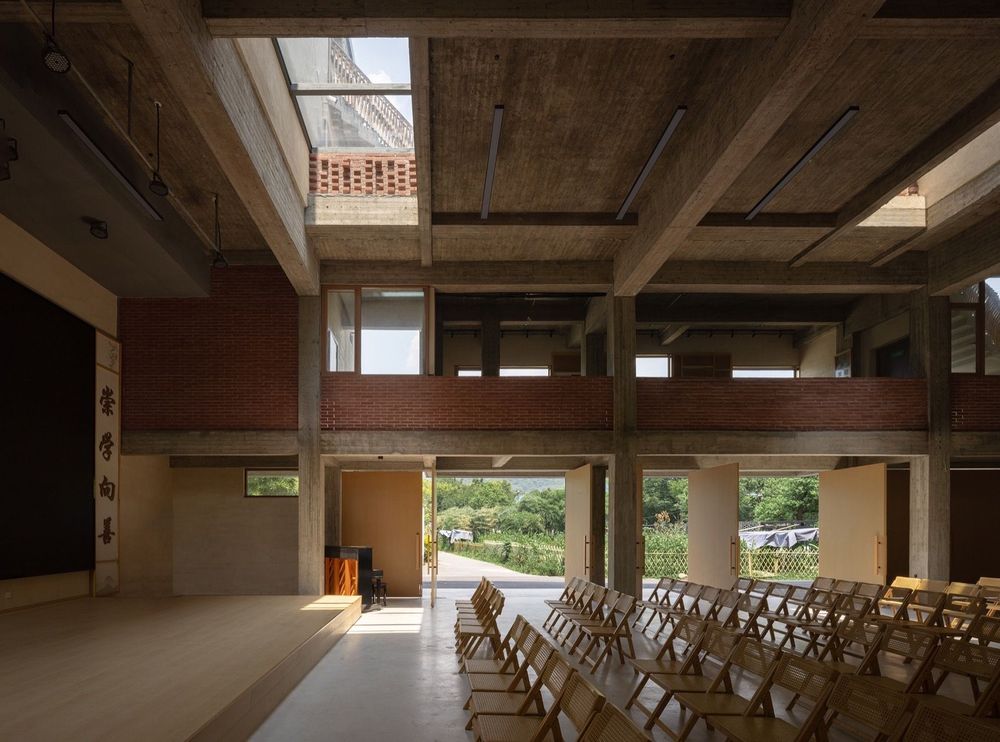
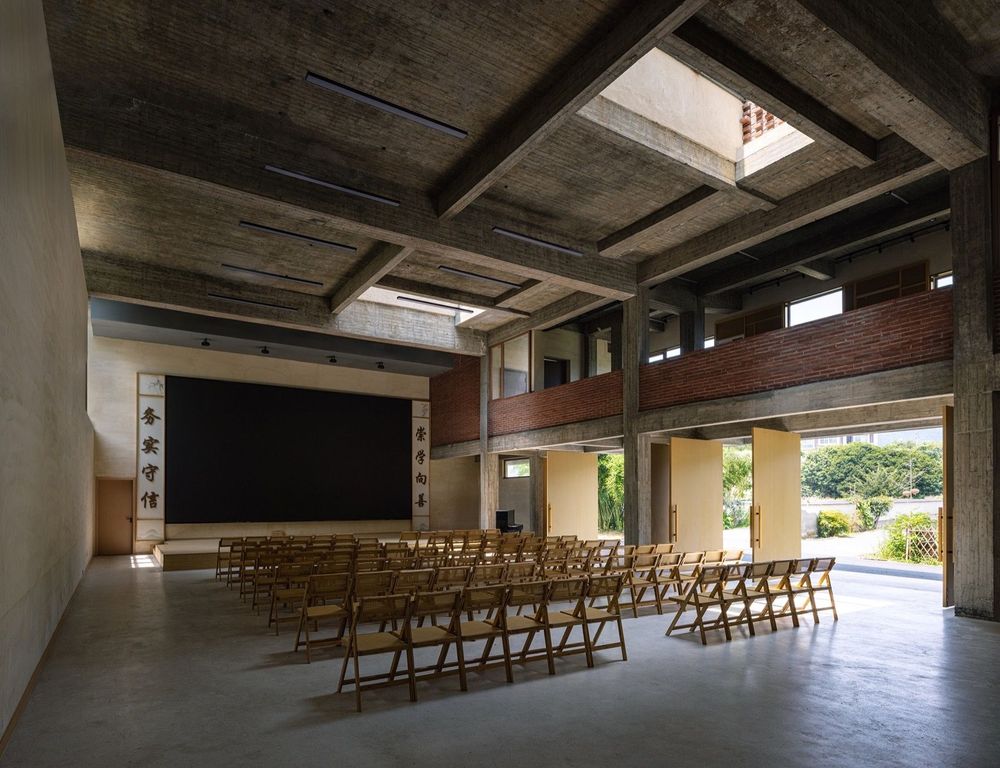
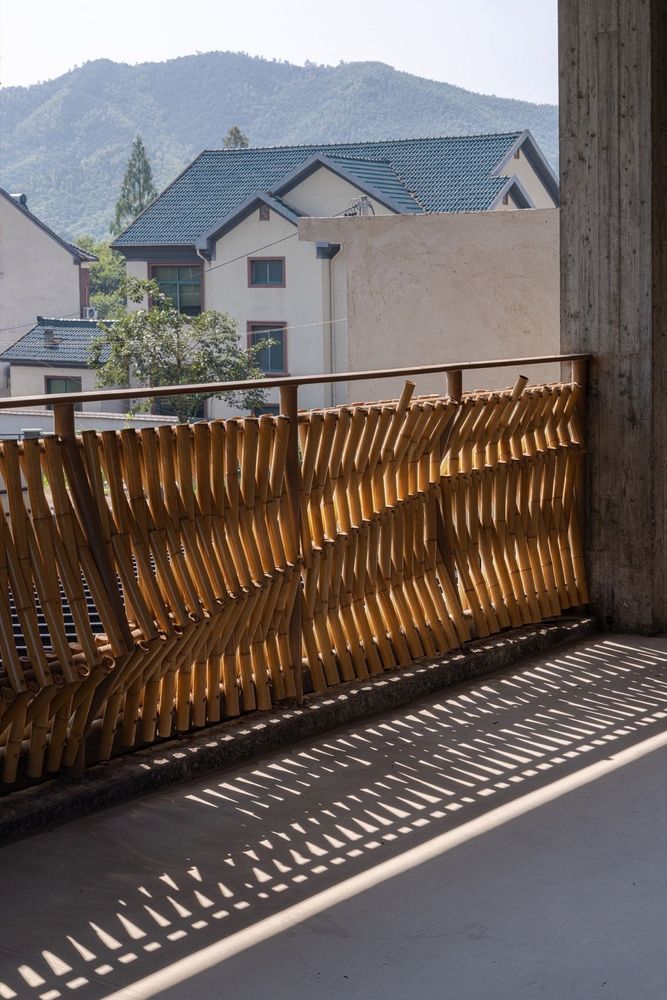
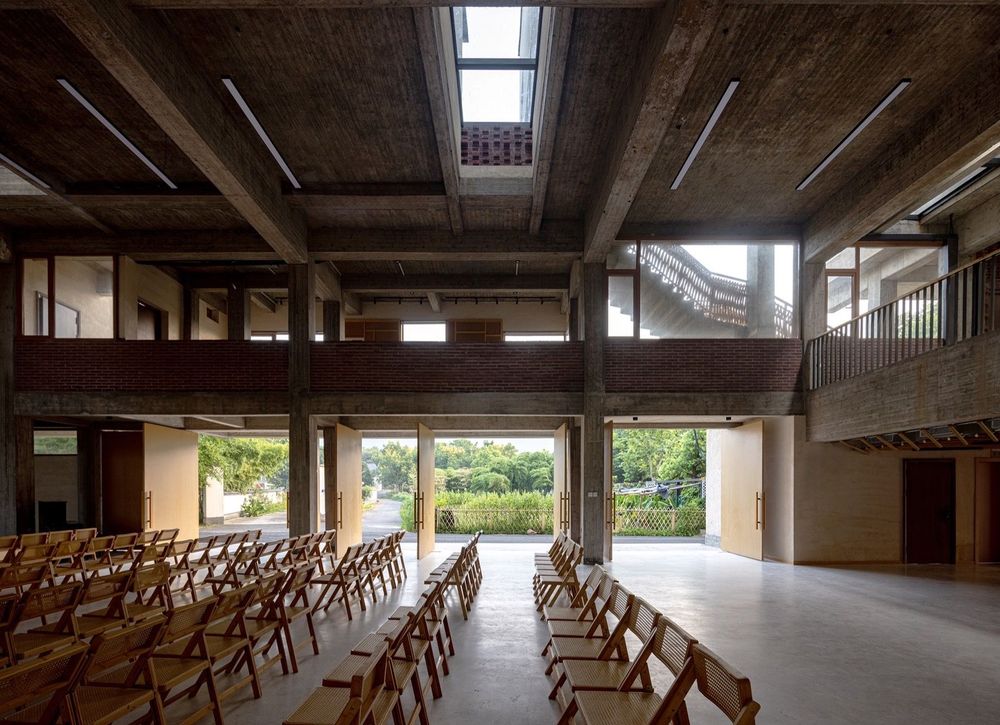
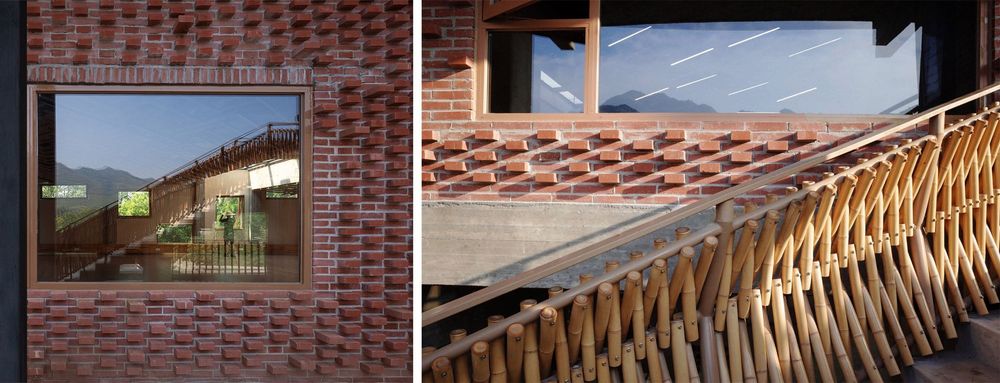
The architecture adheres to a human-centric, village-scaled design approach. The large-volume facade is fragmented into smaller, clustered forms that resonate with the scale of surrounding rural buildings. Skylights are introduced to flood the interiors with natural light, enhancing ventilation and a sense of openness. A continuous, folded staircase runs through the building, guiding visitors from the eastern public plaza to all levels, creating a “one-stop service corridor” that seamlessly weaves together community services, government administration, and cultural spaces. When viewed from a distance, the composition resembles a three-dimensional rural settlement.
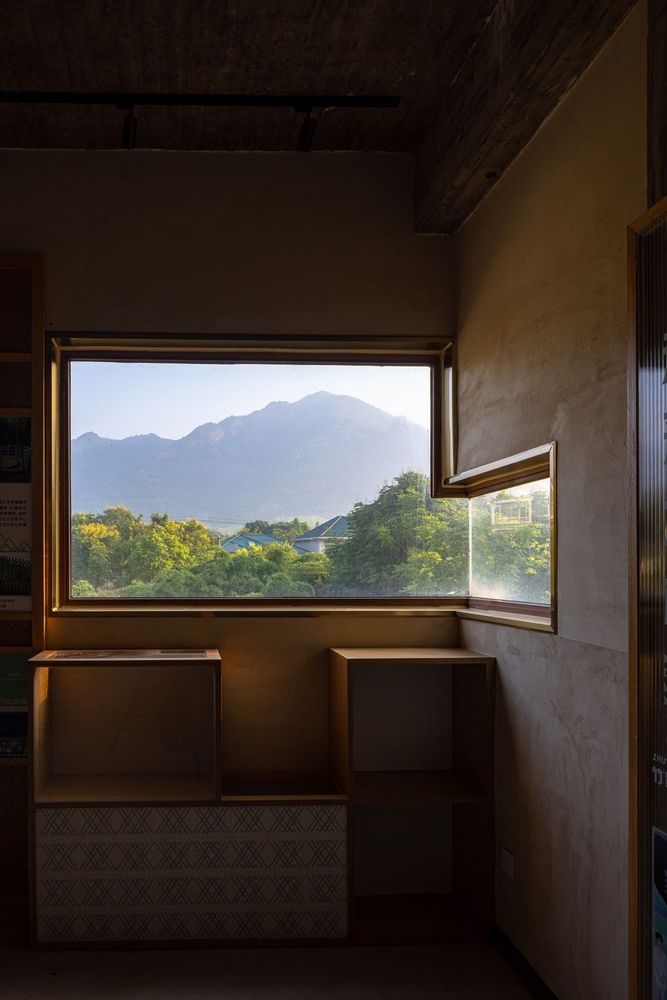
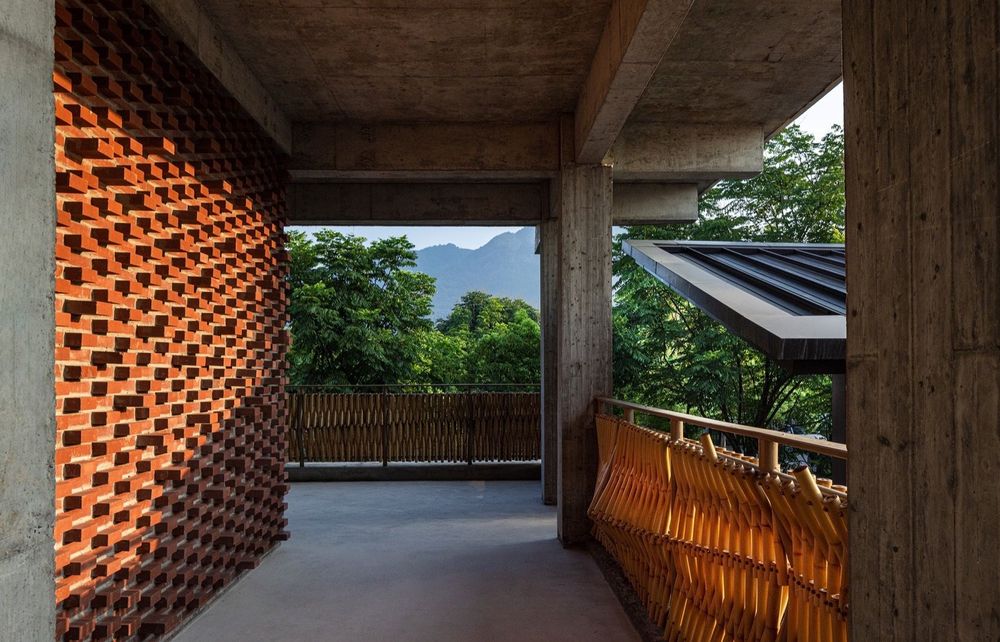
Most importantly, the design offers an experiential journey through spaces of varying openness and enclosure. As visitors ascend, they are greeted with panoramic views of the surrounding green hills, much like a “mountain trail” within the building. This physical journey fosters a sensory dialogue between the human body and the natural environment, leading toward a poetic inhabitation of the countryside.