
Tongmao Wooden Mortise Bus Shelter
Type | Bus Renovation Design
Project | Co-Action Project
Chief Planner | Jiang Jun
Designers | Lu Xiang, Luo Yujie, Zhao Xing
Researchers | Huang Dong'er, Liu Xinyu
Completion Time | 2023
Co-Produced by | Huanghu Town Government, Rong Design Library
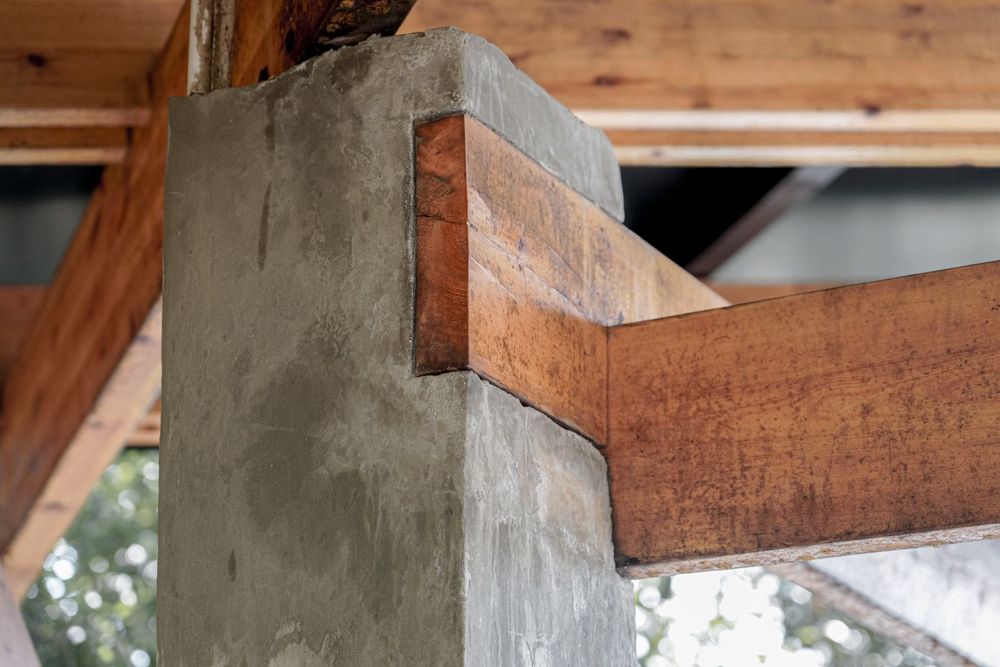
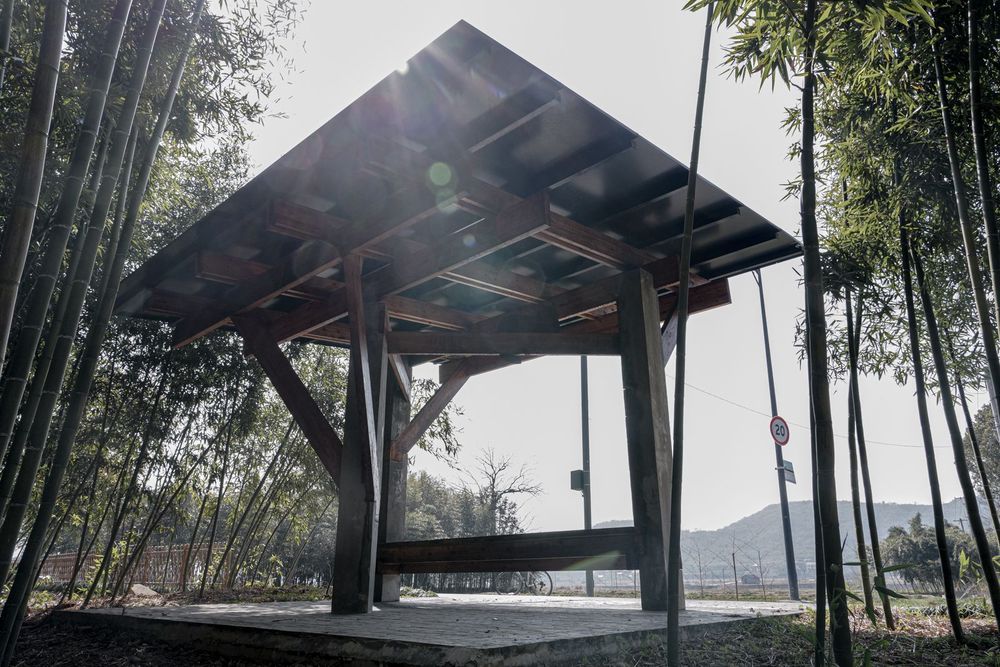
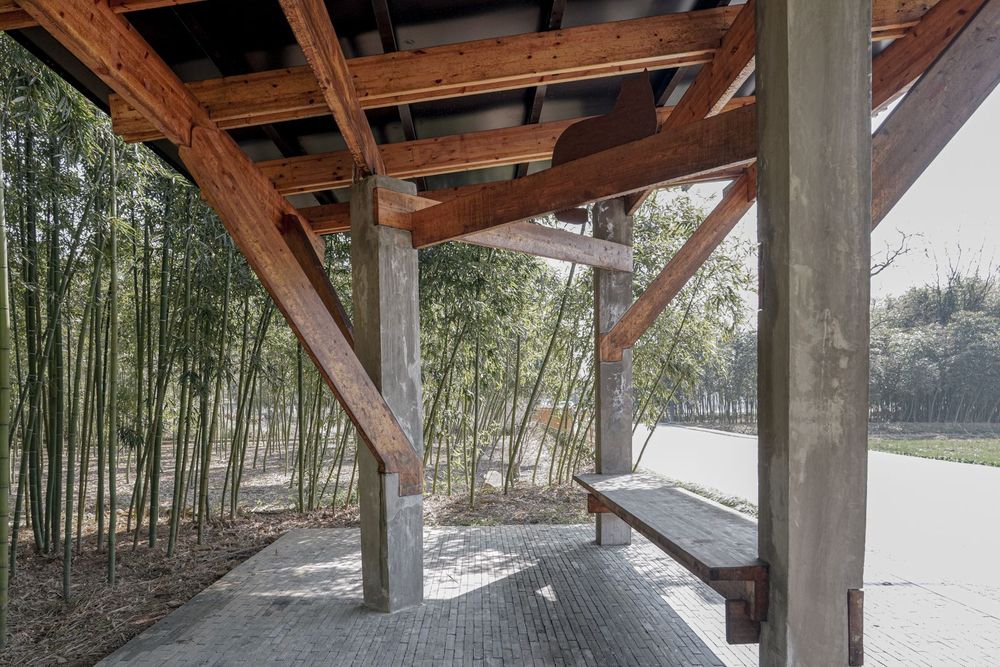
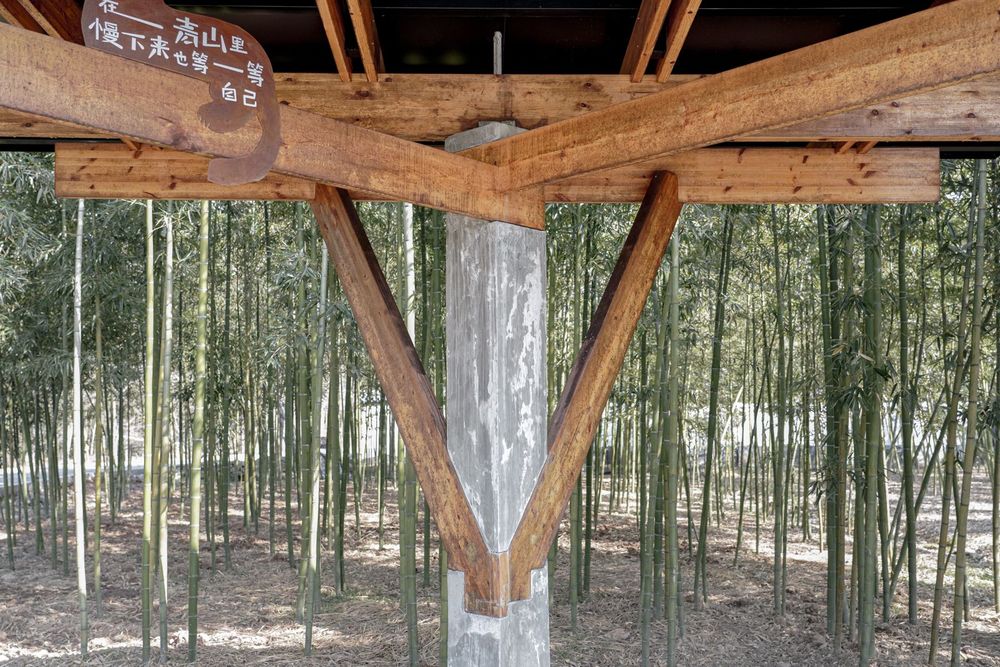
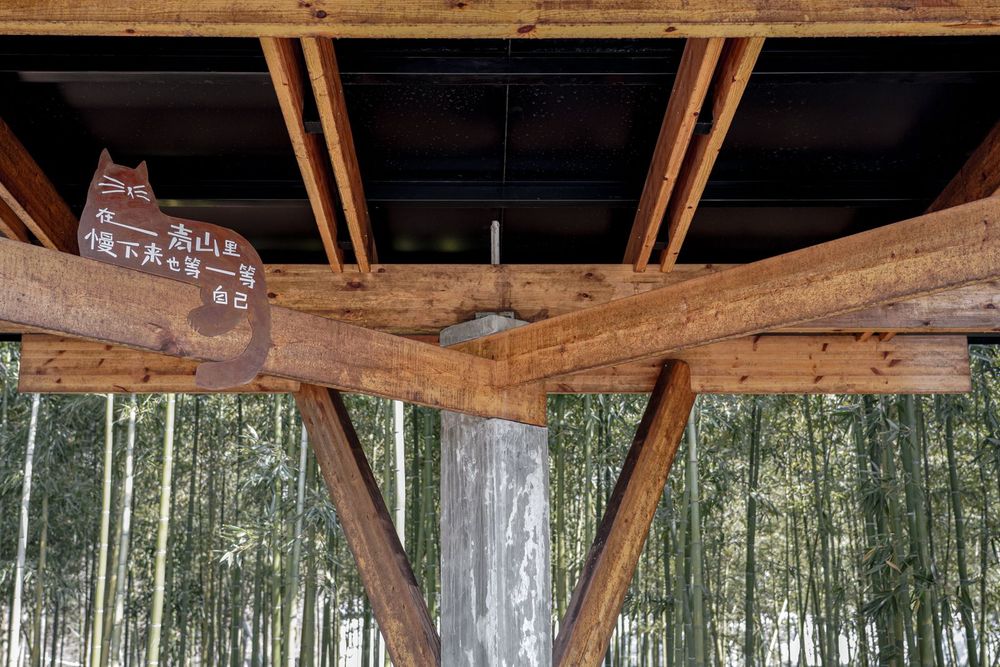
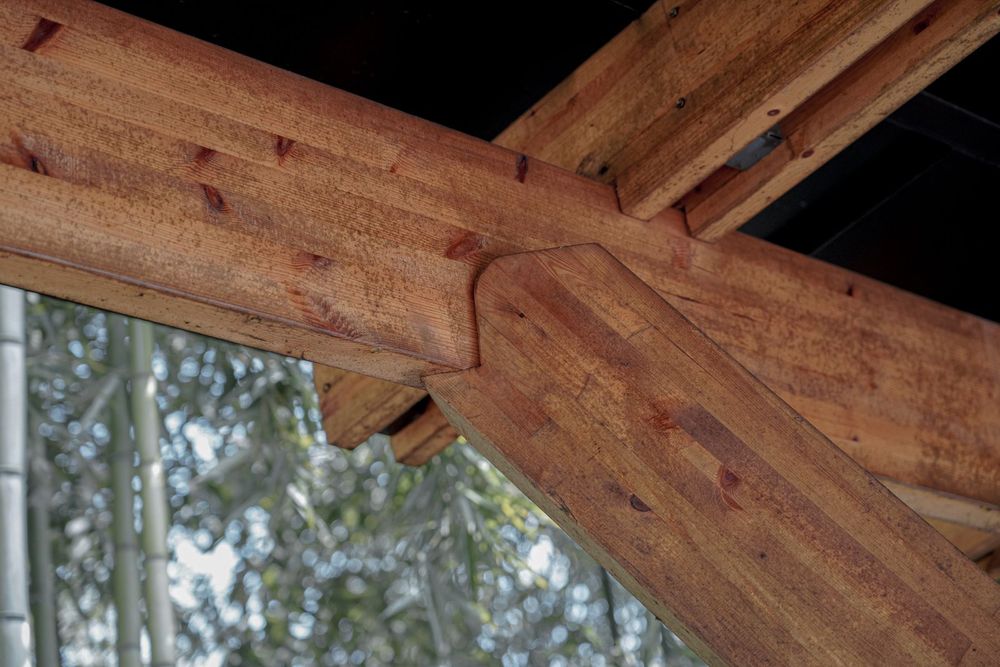
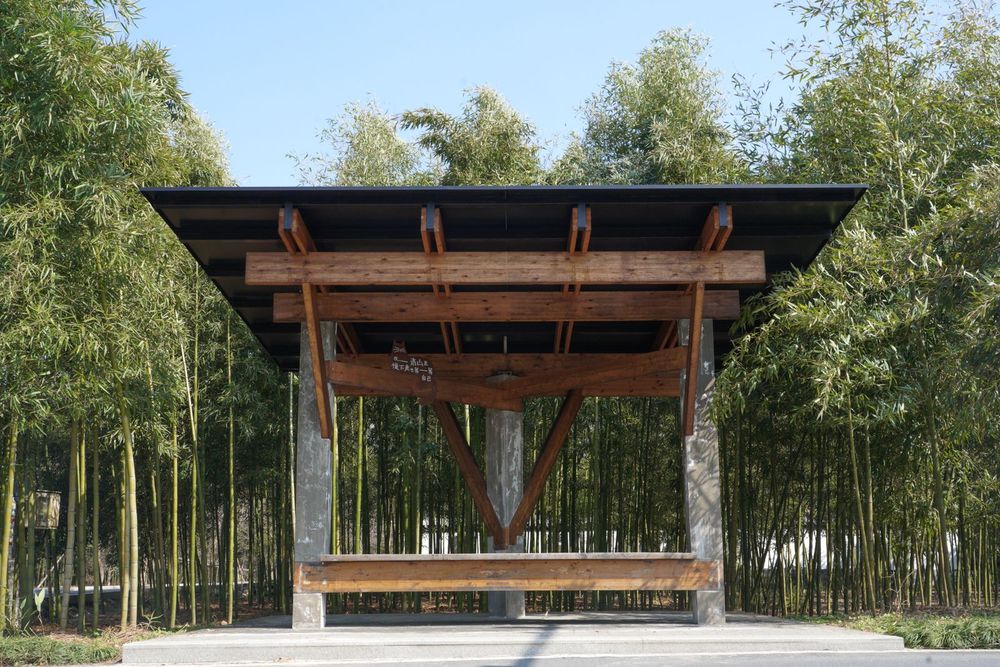
As a traditional Chinese woodworking technique, mortise-and-tenon joins two wooden members using a convex-concave connection. The protruding part is called the tenon, and the recessed part is known as the mortise (or mortise hole, mortise groove). Components can be firmly connected without the use of nails. Tong (砼) is the Chinese abbreviation for concrete. The Tong-Mortise-Wood-Tenon structure combines the advantages of concrete and traditional mortise-and-tenon wood joinery. When applied in architectural structures such as bus shelters, it leverages the robustness of concrete and the sophisticated connection method of mortise-and-tenon to achieve stable and distinctive architectural effects.
Bus shelters featuring the Tong-Mortise-Wood-Tenon structure demonstrate excellent mechanical performance: concrete provides high compressive strength, while the mortise-and-tenon system distributes stress effectively, resulting in superior load-bearing capacity and seismic resistance. Construction and maintenance are convenient, as components can be prefabricated and damaged parts easily replaced. The structure integrates modern and traditional aesthetics with high durability; treated materials ensure long service life and strong structural stability against natural disasters. Environmentally, wood is renewable, concrete is recyclable, and the system uses minimal chemical additives, making it both practical and sustainable.